
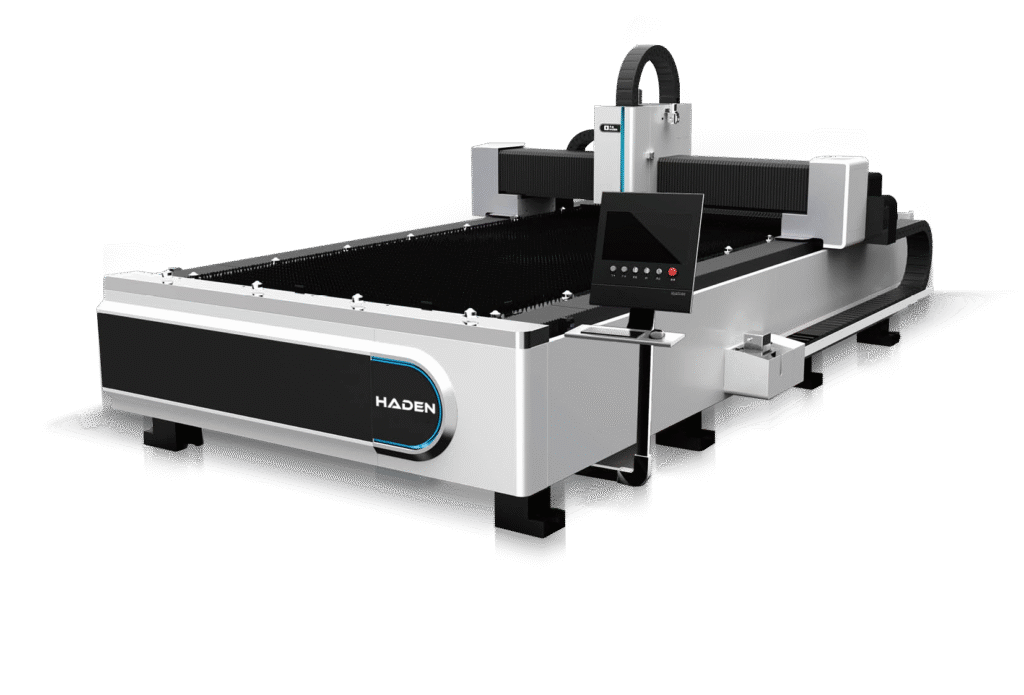
Laser Cutting Machine
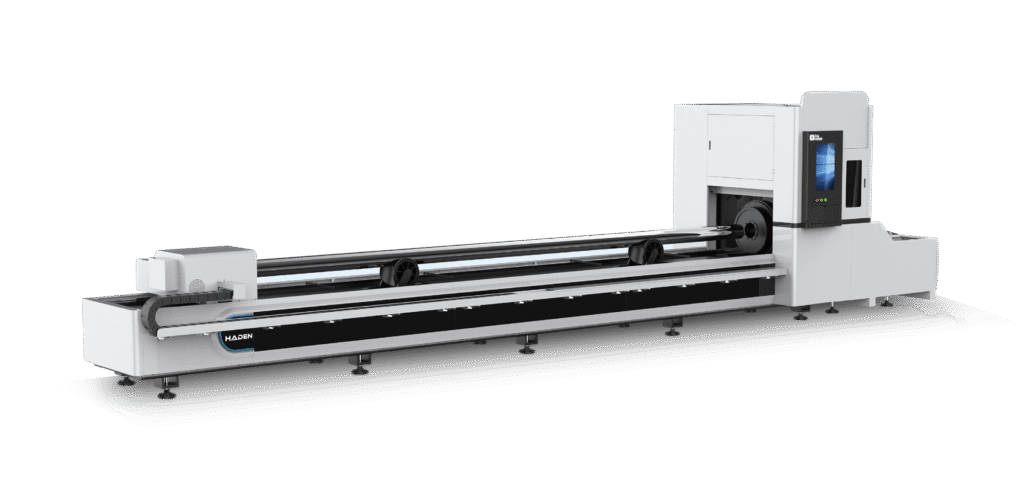
Tube Cutting Machine
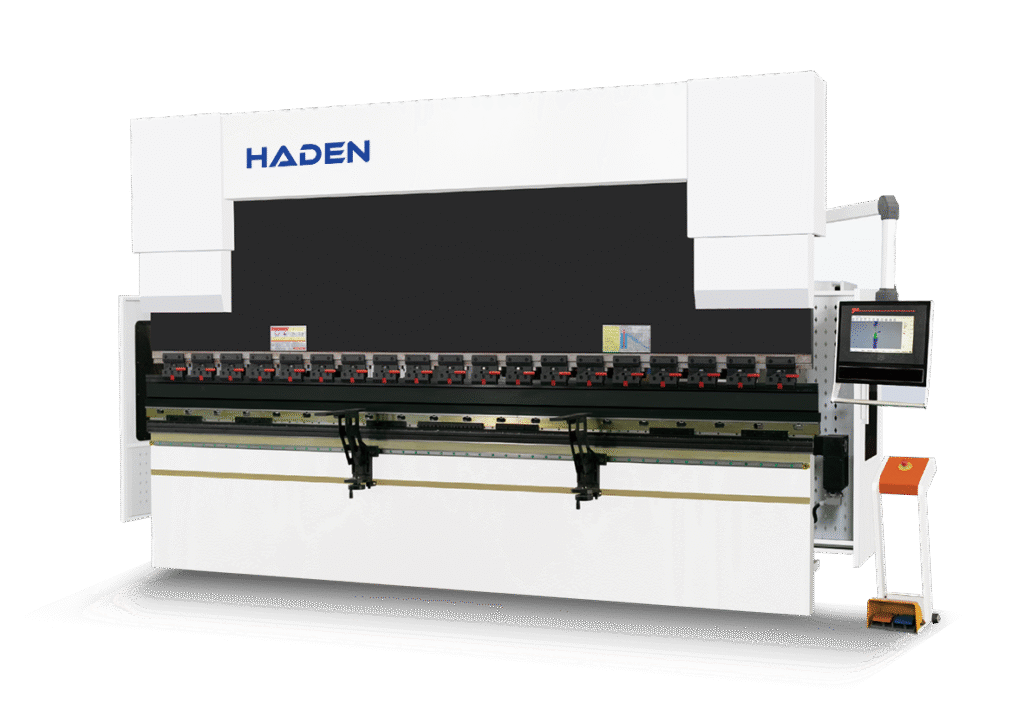
Press Brake Machine
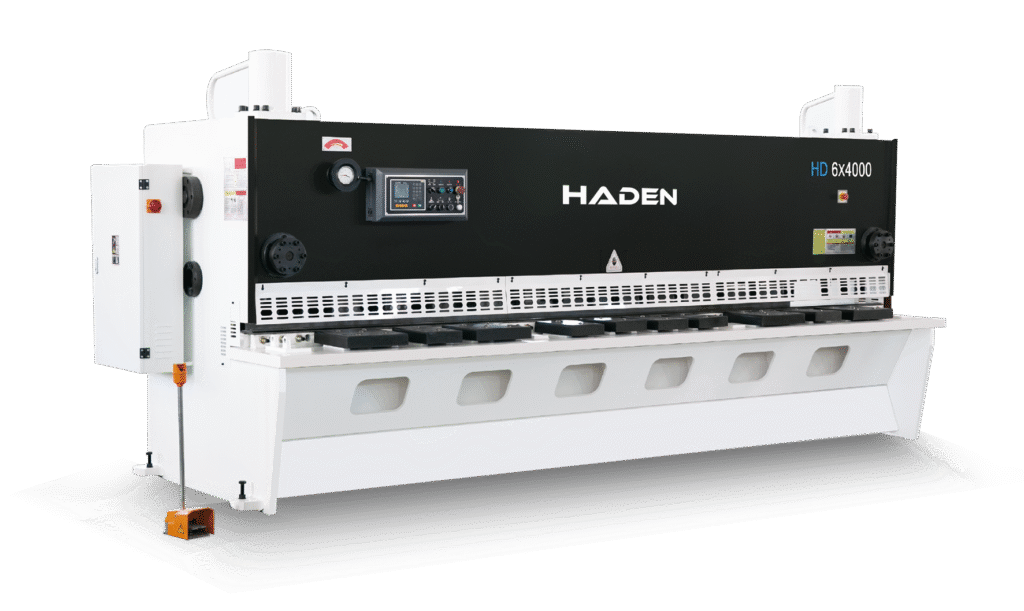
Shearing Machine
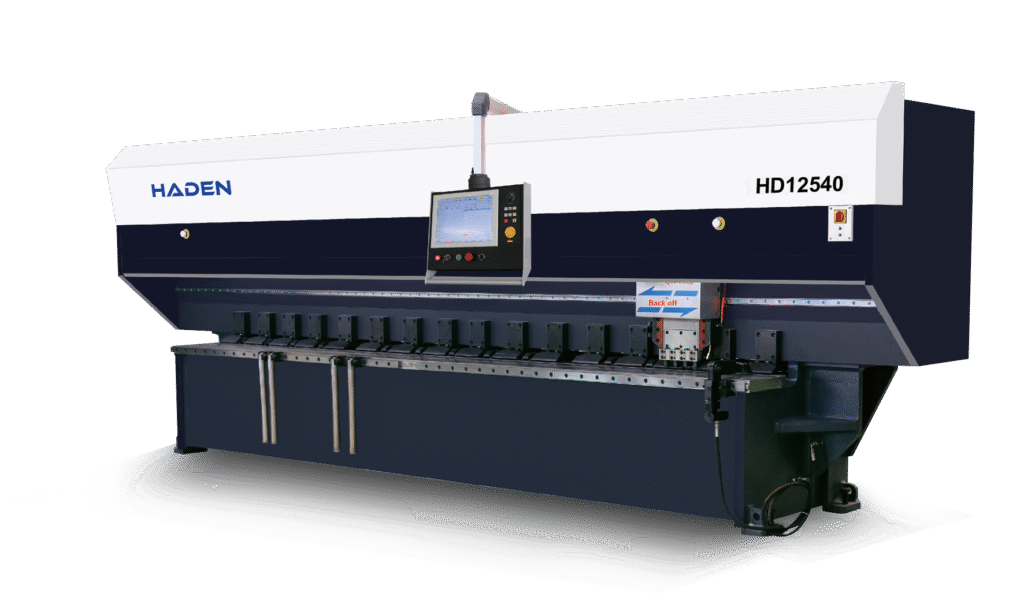
Slotting Machine
Quickly find expert answers about our products, operations, and maintenance.
We will provide you with the most comfortable pre-sales, sales, and after-sales service.
A: You can contact us through our online customer service, call our national service hotline, or submit your request form on our website. We will assign a professional sales engineer to you as soon as possible.
A: To provide you with the most efficient advice, please try to provide: the type of material you want to process (such as carbon steel, stainless steel), the thickness range of the material, the size of the workpiece you usually process, the expected production efficiency and your approximate budget.
A: Our sales engineers are not only salespeople, but also your technical advisors. They will deeply understand your production pain points and provide you with professional equipment selection recommendations, detailed technical solutions, input-output ratio analysis, and workshop layout planning suggestions.
A: Of course. HADEN has a strong R&D team. We can customize the equipment’s workbench size, travel, automation configuration, and other aspects according to your specific process requirements.
A: We welcome you to visit us! You can make an appointment with your sales engineer at any time, and we will arrange for someone to take you to visit our production workshop, technical center and equipment showroom, so that you can experience our manufacturing strength firsthand.
A: Our core advantages are: 1) independent control of core technologies to ensure stable performance; 2) selection of core components from international first-line brands to ensure long-term reliability of equipment; 3) a complete and responsive after-sales service network; 4) providing customers with full life cycle solutions, not just a single device.
A: Our standard quotation clearly lists all items, typically including: the machine, standard accessories, one set of molds/blades, CNC system, shipping costs, installation and commissioning fees, and initial operator training. There are no hidden fees.
A: For standard models, our sales engineers can usually provide you with a complete technical solution and formal quotation within 24 hours after fully communicating with you.
A: We have direct offices or authorized service centers in major industrial cities across the country to ensure that we can provide you with localized and timely pre-sales consultation and after-sales services.
A: Yes, with the consent of our customers, we are happy to share with you the success stories related to your industry and can even arrange for you to visit the factories of our old customers.
A: Of course. We offer free proofing services. Simply send us your drawings and typical materials, and our application engineers will create the proofs for you and return the samples and a complete process report.
A: Yes, proofing within the standard material and size range is completely free. For unconventional or expensive materials, we may charge a material cost fee at our discretion.
A: After receiving your materials and drawings, we usually complete the proofing and send it out within 3-5 working days.
A: You will receive a detailed proofing report, which will include the equipment model used, key process parameters (such as cutting speed, bending pressure), estimated single-piece processing time, etc. These data are very valuable for you to evaluate production efficiency.
A: You are most welcome! We encourage customers to visit us in person. You can communicate directly with our engineers to gain a more intuitive understanding of the equipment performance and operating procedures.
A: Our standard payment method is “30% deposit in advance, 60% before delivery, and 10% balance after qualified installation and commissioning.” We can also discuss flexible payment plans based on your specific situation.
A: Our sales contracts are standardized, which will specify in detail the equipment model, technical parameters, configuration list, price, delivery time, transportation method, installation and commissioning standards, training content, warranty terms, and the rights and obligations of both parties.
A: For standard equipment, our typical delivery time is 20 working days. For customized equipment or automated production lines, the delivery time will be agreed upon in the contract based on the technical proposal.
A: Our quotes are usually inclusive of 13% VAT. As for shipping costs, we will specify whether we will cover them to your factory or use other methods according to the contract.
A: Yes. We have partnerships with many financial institutions and can recommend reliable financing and leasing solutions and assist you in preparing relevant technical documentation.
A: We will entrust a professional logistics company with experience in transporting large equipment to use a dedicated vehicle to deliver the equipment directly from the HADEN factory to your designated location, and purchase full transportation insurance for the equipment.
A: After signing the contract, we will provide you with a detailed Site Preparation Instructions, which will include the equipment foundation diagram, power requirements, gas source requirements (if necessary), and the space required for unloading and positioning.
A: Normally, you need to arrange the unloading (such as crane or forklift), but our after-sales engineers will arrive at the site in advance and guide your staff to complete the unloading and positioning work safely and accurately free of charge.
A: Our engineers will be responsible for the level adjustment, electrical connection, function check, accuracy calibration and first trial production on site to ensure that the equipment meets the technical standards agreed in the contract.
A: For a single standard device, installation and commissioning usually takes [2-3] working days. For an automated production line, the time required depends on the complexity of the solution.
A: Together with your technicians, we will conduct an item-by-item inspection according to the Equipment Acceptance Standards in the contract annex and conduct on-site acceptance testing using your workpiece. After both parties confirm that everything is correct, we will jointly sign the Equipment Acceptance Report.
A: The first on-site training is completely free. We do not have a strict limit on the number of trainees. We recommend that you arrange for 2-3 core operation and maintenance personnel to participate.
Answer: The training content is very comprehensive, including: the basic structure and working principle of the equipment, safe operating procedures, programming and operation of the CNC system, daily maintenance and care, as well as diagnosis and troubleshooting of common faults.
A: Our goal is to enable your employees to operate the equipment independently, safely and efficiently for production and to be competent for daily maintenance work after the training.
A: Yes. We can provide a second on-site training service (travel expenses may apply), or we regularly hold free group training sessions at our headquarters, which you can send your employees to attend.
A: We provide a free warranty of [XX years] for all equipment from the date of acceptance. Some core components (such as lasers and machine tools) have a longer warranty period.
A: During the warranty period, we will provide free spare parts replacement and repair services for any failure caused by defects in the design, manufacturing or materials of the equipment itself.
A: Items not covered by the warranty usually include: normal wear and tear of consumables (such as protective lenses, blades, and molds), man-made damage caused by failure to follow operating procedures, and damage caused by force majeure (such as natural disasters).
A: You only need to call our 24-hour after-sales service hotline and tell us your company name, equipment model and fault phenomenon. Our after-sales system will immediately create a file for you and start the service process.
A: According to the warranty agreement, the replaced faulty spare parts need to be brought back by our engineers or sent back to the company by you for analysis.
A: The fastest way is to call our after-sales service hotline. We have established a comprehensive customer service center to ensure that every call you make is answered and recorded by professionals.
A: We promise a “1-hour call response.” This means that within 1 hour of receiving your call, a technical engineer will contact you to conduct a telephone diagnosis or initiate remote assistance.
A: For CNC systems equipped with a network interface, with your consent, our engineers can remotely connect to your equipment via the Internet to perform fault diagnosis, parameter modification and software updates, which is extremely efficient.
A: If on-site service is confirmed to be necessary, we will follow the principle of “24-hour solution, 48-hour engineer on site” to solve your problem as soon as possible.
A: After the warranty period, we only charge the cost, including the cost of spare parts and the engineer’s travel and labor costs. We will provide you with a clear quotation and will only proceed with the repair after your confirmation.
A: Yes, we promise to provide lifetime technical consultation and support services for every device we sell. Whenever you need us, we are here.
A: For simple faults, we encourage you to troubleshoot under the guidance of our engineers over the phone. However, for problems involving core components or complex circuits, we recommend that you have our professionals handle them to avoid escalating the problem.
A: You can place an order through the after-sales service hotline or directly contact your exclusive after-sales customer service.
A: You can look up spare parts information in the equipment’s User Manual or Electrical/Hydraulic Diagram, or provide the factory number on the equipment’s nameplate. Our spare parts specialists will be able to accurately match you.
A: We have a large central spare parts warehouse at our headquarters and maintain sufficient safety stocks of common spare parts and wearing parts to ensure that we can respond quickly to your needs.
A: After confirming the order, we will send the standard spare parts by express within 24 hours.
A: We strongly recommend that you use genuine spare parts. Non-genuine spare parts may have differences in size and performance. Using them may affect the accuracy of the device, reduce the life of the device, or even cause safety hazards, and may affect your warranty rights.
A: We implement a transparent and unified pricing strategy for spare parts. We also offer discounts to long-term customers.
A: Yes. We can provide you with a variety of technical transformation services, such as CNC system upgrades, adding automation units, and installing safety protection, so that your old equipment can be revitalized and revitalized.
A: Yes, our customer care department will regularly call or visit you to understand the usage of your equipment, collect your opinions and suggestions, and proactively remind you to perform equipment maintenance.
A: We take customer feedback very seriously. If you are dissatisfied with any aspect of our service, you can directly call our service supervision hotline and we will have someone follow up until you are satisfied.
A: Yes. We will hold new product launches and industry application technology seminars from time to time, inviting our customers to discuss cutting-edge technologies and share successful experiences.
A: During the warranty period, if there are important functional updates or optimizations to the device control software, we provide free upgrade services.
A: We welcome you! If you are satisfied with our products and services and successfully refer new customers, we will provide you with generous referral rewards.
A: Under the premise of correct operation and regular maintenance, the design service life of a HADEN industrial equipment is usually more than 10 years.
A: We can provide you with a trade-in (replacement) service for new equipment, allowing your old equipment assets to maximize their value.
A: Yes. For equipment that is out of warranty, you can choose to sign an annual maintenance contract with us. Our engineers will regularly visit your equipment for comprehensive inspections and preventive maintenance.
A: You can follow our official website and WeChat public account. We will regularly release the latest product information, technical articles and company updates.
A: In addition to the secondary training services we provide, we are also building an online training platform. In the future, your employees can learn anytime and anywhere by watching video tutorials.
A: The greatest value lies in choosing a reliable, long-term partner. You receive not only a high-performance device, but also a complete, worry-free professional service system, from pre-sales planning to lifelong maintenance.
A: It depends on the nominal pressure (tonnage) and the bending length. The tonnage determines the thickness of the sheet you can bend, while the bending length determines the maximum width of the workpiece you can process.
A: You can estimate using a simplified formula: Tonnage ≈ [8 × Plate Thickness (mm) × Plate Thickness (mm) × Bend Length (m)] / V-neck Width (mm). The V-neck width is typically 8 times the plate thickness. To ensure accuracy, we strongly recommend contacting a HADEN sales engineer who will use professional calculation software to accurately select the model for you.
A: Throat depth refers to the distance from the center of the slide to the side of the frame. This parameter determines the maximum width of the sheet you can feed from the side and is crucial for processing certain specific bends (such as U-bends) on large sheet materials.
A: We use internationally renowned CNC systems as standard, such as DELEM from the Netherlands, CYBELEC from Switzerland, or ESA from Italy. These systems are user-friendly, powerful, and support 2D/3D graphics programming and bending simulation, which can significantly simplify operations.
A: Electro-hydraulic servo press brakes use optical scales on both sides to detect the position of the slide in real time, and servo valves independently control the hydraulic cylinders on both sides. This results in extremely high synchronization accuracy (up to ±0.01mm), enabling precise bending with off-center loads. Traditional torsional axis synchronization, on the other hand, relies on mechanical forced synchronization, resulting in lower accuracy and inability to effectively compensate for slide deformation. HADEN specializes in providing high-precision electro-hydraulic servo press brakes.
A: The main advantages are: 1) Energy saving, the motor consumes electricity only when bending, which saves more than 50% energy compared to the hydraulic system; 2) High speed and high efficiency, excellent acceleration and deceleration performance, and short working cycle; 3) High precision, no influence from hydraulic oil temperature changes, and extremely high repeatability; 4) Environmental protection, no risk of hydraulic oil leakage, and low noise.
A: It mainly requires stable three-phase industrial electricity (usually 380V/50Hz) and a hardened level concrete floor to ensure the installation accuracy and stability of the equipment.
A: We usually have standard bending machines in stock and can deliver them within 15-20 working days. For models with special customization requirements, the delivery time will depend on the specific configuration.
A: Yes, during the equipment installation and commissioning, our engineers will provide comprehensive training for your operators, covering equipment operation, programming, mold changes, safety procedures and routine maintenance.
A: Deflection compensation is designed to offset the slight deformation of the slide and worktable caused by forces during the bending process. Without compensation, the center angle of the bent workpiece will be too large. HADEN’s press brakes are equipped with either a hydraulic automatic deflection compensation system or a mechanical compensation system as standard. This system pre-elevates the worktable to ensure a consistent angle throughout the entire bend.
A: Our backgauges utilize high-precision ball screws and linear guides, driven by servo motors. The standard configuration includes the X-axis (front and back) and the R-axis (up and down). Optional Z1/Z2 axes (independent left and right movement) and more complex multi-axis backgauges (such as X1/X2, R1/R2, etc.) are available to meet the positioning needs of complex workpieces.
A: Our molds are made of high-strength tool steel (such as 42CrMo) and undergo a complete heat treatment and fine grinding process, resulting in extremely high hardness and wear resistance. The mold you choose depends on your product: the shape and angle of the upper die (folding knife) determine the bending angle, while the V-neck width of the lower die directly affects the bending radius and required tonnage.
A: A quick clamping device is a system for quickly changing and securing the upper mold. Compared to traditional bolt fastening, it can quickly lock or release the mold with a handle or button, greatly shortening mold change time. It is particularly suitable for small-batch, high-variety production models.
Answer: The inner wall of the cylinder of the HADEN bending machine has been precisely rolled or honed to achieve a high surface finish; the seals are from internationally renowned brands (such as Germany’s BOSCH-REXROTH or Japan’s NOK) to ensure long-term use without oil leakage under high pressure and stable pressure.
A: The grating ruler is the “eye” of the electro-hydraulic servo bending machine. It is installed on both sides of the machine body, measuring the position of the slider relative to the workbench in real time and with high precision, and feeding the signal back to the CNC system to form a closed-loop control, thereby ensuring the synchronization accuracy of the slider and the accuracy of the bending angle.
A: A servo motor is a motor that can precisely control position, speed, and torque. In a press brake, it is used to drive the back gauge shaft and main oil pump. It has fast response speed, precise positioning, and lower energy consumption.
A: It’s not complicated. Modern CNC systems all offer a graphical programming interface. You simply enter the sheet’s thickness, material, length, and desired angle and dimensions. The system automatically calculates parameters such as bending pressure, backgauge position, and compensation. It can also perform 2D or 3D simulations to check the bending sequence and interference.
答:展开长度是指将一个已折弯成型的零件“展平”后得到的平面长度。在实际生产中,我们需要先根据零件图计算出展开长度,然后对平板进行下料,再进行折弯。数控系统通常内置了精确的展开长度计算功能。
A: The safety distance is the position to which the back gauge needs to move before the slider moves down to avoid collision with the workpiece. The retraction distance refers to the distance the back gauge moves backward during the bending process to leave space for the workpiece to flip.
A: You only need to enter the target angle as the required value (such as 120 degrees or 45 degrees) during programming, and the system will automatically calculate the slider’s downward depth to accurately control the bending angle. This is called “free bending” or “bending in air”.
Answer: This is a special bending process, which is usually completed in two steps: first use a sharp knife to bend a small angle (such as 30 degrees), then replace the mold or workstation, and use a flattening die to completely press this small angle into a flat double-layer board.
A: Yes, for heavier or larger sheets, we recommend using a front support or a follower support. The follower support can be lifted synchronously with the sheet during the bending process, providing support and saving effort while preventing scratches on the sheet and ensuring bending accuracy.
A: Programs can be stored directly on the CNC system’s hard drive or imported and exported via USB or a network connection. You can organize your program library by part number or customer name for easy access at any time.
A: Our equipment is equipped with multiple safety protections: including two-hand operation buttons, emergency stop buttons, front and rear door power-off protection, and the most important laser safety protection device or light curtain, which can detect the operator’s hands and other foreign objects entering the danger zone when the slider moves downward quickly, and immediately stop the slider movement.
A: We recommend using No. 46 anti-wear hydraulic oil. We recommend replacing it after the first 2,000 hours of use, and then every 4,000-6,000 operating hours or annually, and clean the oil tank at the same time.
Answer: Daily a. Check the oil level. b. Clean the machine and mold. c. Check the emergency stop and safety devices. Weekly a. Check and tighten the bolts in key areas. b. Clean and lubricate the ball screw and guide rails of the back gauge.
A: Possible reasons are: 1) The Y1 and Y2 axis reference points of the slider need to be recalibrated; 2) The mold is unevenly worn or improperly installed; 3) The sheet thickness is uneven; 4) The eccentric bending exceeds the compensation capacity of the machine.
A: You can make fine adjustments on the angle correction page of the CNC system. Simply measure the actual bending angle and enter it into the system, and the system will automatically correct the subsequent bending depth.
A: First, check if the back gauge finger (locating block) is loose. If not, you may need to recalibrate the reference point of the back gauge shaft. Mechanically, check if the timing belt is too loose or the ball screw connection is loose.
A: Possible causes include: 1) the relief valve setting pressure is too low; 2) the oil pump is worn; 3) there is a leak in the system; or 4) the hydraulic oil is too dirty, causing the valve to become stuck. Please contact a HADEN after-sales engineer for troubleshooting.
Answer: 1) Use the correct tonnage to avoid overloading; 2) Keep the mold clean to prevent iron filings and other debris from crushing the mold; 3) For commonly used lengths, the mold can be used in sections to avoid local excessive wear; 4) Apply anti-rust oil when not in use and store properly.
A: Stop the machine immediately and inspect it. The noise may be caused by loose motors, oil pumps, or certain mechanical parts. Check the oil pump suction pipe for leaks or insufficient hydraulic oil.
A: This is an automation solution that integrates an industrial robot with a press brake. The robot can automatically perform tasks such as loading and unloading, workpiece positioning, flipping, and palletizing, enabling 24-hour unmanned production. HADEN provides a mature press brake automation cell.
A: Yes. Stainless steel is stronger and more resilient than ordinary carbon steel. Therefore, when bending stainless steel, you need to: 1) select a larger tonnage (approximately 50% more) than when bending carbon steel; 2) use a larger V-neck in the die; and 3) set a larger angle compensation when programming.
A: It can be achieved through the “step bending” or “multi-segment bending” function. That is, a large arc is decomposed into many small straight line bends, and through continuous, small angle, and small step bending, it is finally fitted into a smooth arc.
A: Yes, all our CNC systems come with PC-based offline programming software. Engineers can program and simulate complex parts on their office computers and then transfer the program to the machine on the shop floor, eliminating the need to use valuable machine time.
A: Yes. Our high-end CNC systems support Industry 4.0 standards and can be connected to the factory’s local area network to exchange data with your production management system, enabling remote issuance of production tasks and real-time monitoring of production status.
A: This is a high-precision online measuring device installed on the bending machine. It can measure the angle of the workpiece in real time during the bending process and feed the data back to the CNC system. The system automatically adjusts the pressure to ensure the final angle is accurate. It is especially suitable for applications with high precision or uneven material thickness.
A: Yes. To prevent scratching the sheet surface, it is recommended to use a non-marking bending die (such as a V-shaped die with nylon inserts) or place a special non-marking bending pad on the ordinary die.
A: We provide a two-year standard warranty for the entire machine, and provide longer quality assurance for core components such as hydraulic valve groups and motors.
A: Absolutely guaranteed. We maintain detailed documentation for every piece of equipment we sell and always stock all standard models of wearing parts and critical spare parts to ensure we can quickly respond to your needs.
A: You can use our 24-hour service hotline, the online customer service on our official website, or directly contact the sales/service engineer in your area.
A: If the technical evaluation is feasible, we can provide you with services such as CNC system upgrades, safety device installation, and automation transformation.
A: Through network connection, our engineers can remotely access the CNC system of your bending machine to perform fault diagnosis, parameter adjustment and software update, which greatly improves the efficiency of problem solving.
A: Yes, we provide standard molds that come with the equipment, and we can also design and customize various non-standard and special-shaped molds according to your product drawings.
A: Yes, each unit is shipped with a complete set of user documentation, including an operation manual, maintenance manual, hydraulic schematics, and electrical schematics.
A: As a professional sheet metal equipment manufacturer, in addition to bending machines, we also provide a series of equipment such as laser cutting machines and shearing machines, and can provide you with a complete set of sheet metal processing solutions.
A: You are most welcome to send your drawings and materials to our factory or technical center. We will conduct free proofing tests for you, allowing you to witness the excellent performance of our equipment with your own eyes.
A: Laser cutting uses a high-energy-density laser beam to illuminate a workpiece, causing the material to rapidly melt, vaporize, ablate, or reach its ignition point. Simultaneously, a high-speed airflow coaxial with the beam blows away the molten material, thereby achieving the cut. This is a high-precision, high-speed cutting process.
A: Our laser cutting machines can be used on a wide variety of materials, including the following:
A: HADEN laser cutting machines offer the following core advantages:
A: Choosing the right model depends primarily on your processing needs. You can consider the following factors:
A: Laser cutting machines are primarily used for cutting two-dimensional flat sheet materials, while laser tube cutting machines are specifically designed for cutting various tube shapes, such as round, square, rectangular, and special-shaped tubes. HADEN’s tube cutting machines are equipped with specialized chucks and support devices that enable automatic tube loading, rotation, and cutting.
A: We provide a one-stop, turnkey service, including:
A: HADEN is a professional laser equipment manufacturer integrating R&D, production, sales and service. We have our own core technical team and production base to ensure that we can provide you with the best quality products and the most direct service.
A: Not necessarily. Higher power allows for thicker materials to be cut and faster speeds, but also increases equipment cost and energy consumption. Choosing the right power should meet at least 90% of your typical machining needs to avoid overkill or underpowering.
A: We usually have standard laser cutting machines in stock and can deliver them within three weeks. For customized models or automated production lines, we will need to confirm the delivery time with you based on the specific plan.
A: Of course. We welcome you to mail your materials or visit our proofing center. Our engineers will provide you with free samples based on your drawings and requirements, allowing you to witness the superior cutting quality of HADEN equipment with your own eyes.
A: Fiber lasers are currently the mainstream laser cutting technology. They transmit laser light through optical fibers and offer advantages such as high electro-optical conversion efficiency, excellent beam quality, strong stability, and maintenance-free operation. HADEN uses internationally renowned fiber lasers with a theoretical service life of over 100,000 hours.
A: Yes. Assist gas in laser cutting helps with combustion, removes slag, and protects the lens.
A: The positioning accuracy of our equipment can reach ±0.03mm, and the repeatability can reach ±0.02mm, which is sufficient to meet the needs of most precision machining.
A: Maximum operating speed (idle travel speed) refers to the fastest speed the laser head can move when not cutting, and it determines the overall efficiency of the equipment. Maximum cutting speed is the fastest speed that can guarantee cutting quality for a specific material and thickness. Both are important indicators for measuring equipment performance.
Answer: HADEN’s professional laser tube cutting machine can not only cut conventional round tubes, square tubes, and rectangular tubes, but also process angle steel, channel steel and other profiles, as well as perform complex processes such as 45-degree angle cutting, hole opening, and arc cutting.
A: We use pneumatic self-centering chucks, which can automatically clamp pipes of different diameters without manual intervention. The clamping force is large and stable, which can effectively avoid the problem of deformation of thin-walled pipe clamps and support automatic centering of the pipe.
A: To ensure stable operation, it is recommended that the device be installed in a dust-free workshop with constant temperature and humidity. A stable power supply (voltage fluctuation less than ±5%) and reliable grounding are also crucial.
A: Yes, we offer comprehensive automation solutions, including:
A: Our machine bed is welded from high-strength steel plates and annealed at high temperatures to eliminate welding stress. This gantry-style structure offers exceptional rigidity and stability, ensuring the machine remains stable even at high speeds, ensuring long-term cutting accuracy.
A: We use an industry-leading professional CNC system with a user-friendly interface that’s easy to use. The system includes a comprehensive database of cutting processes for different materials and thicknesses. Operators simply select the appropriate parameters to begin cutting. We also provide comprehensive free training to ensure your employees are equipped to operate independently.
A: Operators must undergo professional training from HADEN or our authorized partners and pass the assessment before they can take up their posts. The training content includes equipment operation, safety regulations, daily maintenance, etc.
A: Laser beams are seriously harmful to the human eye and should never be viewed directly. Our equipment is equipped with a fully enclosed protective cover and optical protective glass that meets European CE standards to effectively isolate laser radiation. Specialized laser safety glasses must be worn during operation.
A: Daily maintenance is very simple and primarily includes:
A: The main wearing parts include the protective lens, nozzle, and ceramic ring. These are standardized accessories. HADEN provides you with cost-effective original spare parts. The replacement cost is low, and we always keep them in stock to ensure supply.
A: You only need to select or enter the corresponding material type and thickness in the operating system, and the system will automatically call or generate the optimal cutting parameters, including power, speed, gas pressure and focus position, etc., without the need for manual complex adjustments.
A: Our pipe cutting machine is equipped with multiple sets of servo support devices, which can automatically rise and fall according to the length of the pipe, providing stable support for the pipe at all times during the cutting process, effectively preventing sagging and deformation caused by its own gravity.
A: Yes. HADEN laser cutting machines are designed for industrial production. Their core components are all high-quality and highly stable. Combined with a stable workshop environment and proper maintenance, they can fully meet the needs of 24-hour continuous operation.
A: Our equipment is equipped with a zoned dust removal system as standard. The interior of the bed is divided into multiple zones. The exhaust vents in each zone will automatically open, effectively removing the dust generated by cutting and keeping the working environment clean.
A: The chiller is the laser’s “air conditioner,” providing constant-temperature cooling water to ensure the laser’s continuous and stable power output. If the water temperature is abnormal, the device will automatically sound an alarm and stop operating to protect the laser.
A: Professional nesting software (such as CypCut) has an automatic path optimization function. It will plan the shortest air path and use a “leapfrog” lifting method to greatly reduce the non-cutting time of the laser head.
A: Don’t worry. First, you can refer to our Operation and Maintenance Manual for preliminary troubleshooting. If the problem persists, please contact our after-sales service hotline immediately. Our engineers will guide you through the problem by phone or remote assistance.
A: After receiving your repair request, if the problem cannot be solved remotely, we will arrange for a professional after-sales engineer to arrive at your site within [24/48] hours to solve your problem.
A: There are many reasons for burrs, common ones include:
A: This is usually caused by the heat generated by the laser. You can try using nitrogen cutting, increasing the cutting speed, or using micro-connection processes to reduce the scope of the heat-affected zone and thus improve the deformation problem.
A: During the warranty period, we provide free repair and spare parts replacement services for equipment failures not caused by human factors. After the warranty period, we only charge the cost and promise to provide lifelong technical support.
A: Absolutely professional. Every HADEN after-sales engineer has undergone rigorous theoretical and practical training, has extensive experience in equipment installation, commissioning, and maintenance, and holds a certificate of qualification.
A: We have a large spare parts warehouse in China with a sufficient inventory of commonly used spare parts. For core components, we have established strategic partnerships with suppliers to ensure a quick response when you need them.
A: Yes. We will release optimized and upgraded versions of the software from time to time. During the warranty period, we provide free software upgrade services to ensure that your device is always in optimal working condition.
A: This could be due to an out-of-round tube, focus shift, or power attenuation. You can check the chuck clamping, recalibrate the center, or check the laser’s output power. Our engineers can also assist you with remote diagnosis.
A: A sudden power outage may interrupt the ongoing cutting task, but it has little impact on the hardware itself. Our equipment has a breakpoint resume function. After power is restored, it can continue cutting from the interrupted position, minimizing material waste.
A: Our core competitiveness lies in our unwavering pursuit of quality and our deep understanding of customer needs. We insist on independent research and development, master core technologies, and provide customers with a full lifecycle service from pre-sales consultation to after-sales support.
Answer: After years of development, HADEN has become one of the leading domestic manufacturers of laser intelligent equipment. Our products are sold at home and abroad, and we have a broad customer base and a good market reputation in multiple industries.
A: You can contact us through the following methods:
A: Yes, we actively participate in major metal processing and laser industry exhibitions at home and abroad every year, such as the Beijing Machine Tool Exhibition, Shanghai Industrial Expo, Indonesia International Machine Tool Exhibition, Bangladesh Dhaka Machinery Exhibition, etc. You are welcome to visit our booth to discuss your ideas.
A: All our equipment strictly abides by international safety standards during the design and manufacturing process and has passed ISO9001 quality management system certification and EU CE certification.
A: In addition to laser cutting machines and laser tube cutting machines, we also provide laser welding machines, laser marking machines and related automation solutions, and are committed to creating intelligent metal processing workshops for our customers.
A: Choosing HADEN not only gives you a high-quality machine, but also a trustworthy partner. We are customer-centric, providing customized solutions, reliable product quality, and worry-free after-sales service to help you succeed.
A: Yes, we provide customers with free on-site training with no limit on the number of people until your operators can operate the equipment completely independently and safely.
A: Our vision is to become a leading global provider of laser application solutions, change the world with intelligent manufacturing, and create maximum value for our customers.
A: A shearing machine is a mechanical device that applies shear force to metal sheets through the relative movement of upper and lower blades, breaking and separating the sheets into the required size. It is one of the most basic and important pieces of equipment in sheet metal processing, and is mainly used for straight-line cutting of metal sheets.
A: We mainly produce two series of hydraulic guillotine shears: hydraulic guillotine shears and hydraulic swing shears. Guillotine shears have high shearing precision and are suitable for shearing plates of various thicknesses. Swing shears have a simple structure, are economical and durable, and are widely used in shearing medium and thin plates.
A: The two key parameters you need to determine are the maximum shear thickness and the maximum shear length. For example, a swing shear with the model number QC12Y-6×3200 means it can shear carbon steel plates up to 6 mm thick and 3200 mm wide.
A: The choice depends on your processing needs. The gantry shear’s blade carriage moves vertically and linearly, allowing for adjustable shear angles. This provides uniform blade clearance, minimizes distortion, and offers higher precision, making it particularly suitable for shearing thick plates and stainless steel. The pendulum shear’s blade carriage swings in an arc around a fixed point, resulting in a more robust structure. While the shear angle is fixed, its precision is slightly lower than that of the gantry shear, offering a more cost-effective solution and making it ideal for mass production of medium and thin plates.
A: CNC shearing machines equipped with a CNC system (such as the ESTUN E21S) automatically control backgauge positioning, shear stroke, and shearing times. The operator simply inputs the desired size and quantity, and the machine automatically, continuously, and accurately completes the shearing process, greatly improving production efficiency and processing accuracy while reducing reliance on manual operation.
A: Our standard configuration includes: main machine, a set of pre-installed upper and lower blades, front support arm, rear stop device, foot switch, operation manual and a set of maintenance tools.
Answer: We mainly use Nanjing ESTUN’s E21S, E200PS and other special shearing machine CNC systems, as well as the Netherlands DELEM’s DAC310, DAC360 and other higher-end controllers, which have stable performance and easy operation.
A: The shearing machine generates impact during operation, so it needs to be installed on a solid, flat concrete floor. We will provide a detailed foundation drawing, and you only need to prepare it according to the drawing requirements. Usually, there is no need to dig a deep pit.
A: We recommend using anti-wear hydraulic oil No. 46. Keeping the hydraulic oil clean and at the right oil level is the key to ensuring stable operation of the shearing machine.
A: To ensure the reliability and durability of the equipment, we use internationally renowned brands such as Siemens or Schneider electrical components, and integrated hydraulic valve groups from Bosch-Rexroth or Vickers of the United States.
A: Blade clearance refers to the horizontal gap between the upper and lower blades. This gap must be precisely adjusted based on the thickness and material of the sheet being cut. Too little clearance can increase blade wear and even damage the blades; too much clearance can cause severe burrs and tears on the sheared surface, affecting workpiece quality.
A: Our shears are equipped with a quick blade gap adjustment mechanism. The operator simply turns the handwheel according to the scale on the panel (corresponding to different plate thicknesses) to quickly and accurately adjust the gap, without the need for a feeler gauge.
A: The shear angle refers to the angle between the upper and lower blades. On guillotine shears, the shear angle is adjustable. When shearing thin plates, a smaller shear angle can reduce distortion; when shearing thick plates, a larger shear angle can effectively reduce the required shear force. The shear angle on a swing shear is fixed.
A: The backgauge is used to precisely position the sheet material to determine the width of the cut workpiece. HADEN’s CNC backgauge is driven by a ball screw and servo motor or variable frequency motor, enabling fast and precise positioning with a repeatability of ±0.1mm.
A: Before shearing begins, a row of holding cylinders press down, applying sufficient pressure to firmly press the metal sheet against the workbench. This prevents the sheet from slipping or lifting during shearing and is a key feature for ensuring dimensional accuracy and operational safety.
A: Shearing speed varies depending on the machine model and the thickness of the plate being sheared. When shearing thin plates, the number of strokes will be higher. For example, a 6×3200 shearing machine typically has a stroke rate of 8-15 strokes per minute.
A: This is an auxiliary positioning function. The device projects a clear light and shadow line to the position of the lower blade edge. The operator can align the hand-drawn line on the plate with this light and shadow line to cut non-standard sizes or irregular shapes.
A: Yes, our hydraulic system is equipped with a relief valve, which is a safety pressure relief device. When the shear force exceeds the rated pressure of the system (for example, when shearing too thick a plate), the relief valve will automatically open to protect the machine and hydraulic system from damage.
A: After the cut is complete, the tool holder needs to quickly return to the top dead center. This is achieved through an accumulator (nitrogen cylinder), which stores energy during the cut and releases it during the return stroke, allowing the tool holder to be raised quickly and smoothly.
A: The surface of our workbench is covered with ball bearings or support balls, which can significantly reduce the friction of the sheet when it is fed in, making the operation more labor-saving and effectively preventing the surface of the sheet from being scratched.
A: Our standard blades are made of high-quality alloy tool steel, such as 6CrW2Si, Cr12MoV, etc. These materials have undergone rigorous heat treatment process and have high hardness, high wear resistance and sufficient toughness.
A: Our blades are usually rectangular and have four identical cutting edges. When one edge is worn, it can be rotated 90 degrees and a new edge can be used until all four edges are worn, greatly extending the life of the blade.
A: Blade life depends on many factors, such as the type of material being cut, its thickness, frequency of operation, and whether the blade gap is set correctly. Under normal use, a set of blades can cut thousands of tons of carbon steel before requiring the first sharpening.
A: When you find that the burrs on the plate increase significantly after shearing, the cross-section quality decreases, or the noise increases abnormally during shearing, and the machine feels labored, it usually means that the blade has become blunt and needs to be rotated or removed for professional grinding.
A: Yes. However, please note that stainless steel is approximately 50% stronger than carbon steel. Therefore, the maximum thickness of stainless steel cuts should be approximately half that of carbon steel. When cutting aluminum, the blade gap should be adjusted to a smaller value for optimal cutting performance.
A: Yes, for special materials such as high-strength stainless steel and wear-resistant plates, we can provide special blades made of higher-grade materials such as H13K and LD, which have stronger hardness and impact resistance.
A: When shearing narrow strips with a width less than 10 times the plate thickness, distortion is likely to occur. This is a physical phenomenon during the shearing process. Our guillotine shears, with their adjustable shearing angle, can better control and minimize this distortion.
A: For work conditions that require positioning and shearing from the front of the plate, the front gauge can provide a positioning reference. It is usually installed on the front support arm and has a scale for simple size positioning.
A: The guardrail is an important safety device. It is installed in front of the press cylinder to prevent the operator’s fingers from getting too close to the dangerous shearing area.
A: The pressure of the press cylinder may be insufficient, or the anti-slip pad of the presser foot may be worn. You should check the pressure of the hydraulic system and make sure that the presser foot can firmly press the sheet.
A: Our shearing machines are designed to be very user-friendly, especially the CNC models, which have an intuitive operating interface. Usually, after one or two days of on-site training, operators can fully master basic operations and daily maintenance.
A: In addition to the guardrails and hydraulic overload protection mentioned above, our equipment is also equipped with an emergency stop button, a foot switch safety cover, and power-off protection when the electrical cabinet door is opened to fully ensure the safety of the operator.
A: Before starting the machine every day, check the hydraulic oil level, check the blade for cracks, and run the machine several times without load to confirm that all parts are functioning properly. Clean waste and wipe the machine regularly to keep the equipment clean.
A: It is recommended to replace the hydraulic oil and filter element after the first 2000 hours of use. After that, it is recommended to replace it once a year or every 4000-6000 hours, depending on the cleanliness of the oil and the intensity of use.
A: The machine is usually equipped with a manual or automatic lubrication pump. Grease should be regularly added to the guide rails, lead screws and other key parts of the back gauge according to the requirements of the equipment manual.
A: Stop the machine immediately and inspect. First, check that the blade gap is set correctly, then check the blade for severe wear or chipping. Abnormal noise is usually caused by excessive shear load.
A: Wipe the machine clean inside and out, and apply a layer of anti-rust oil on unpainted metal surfaces such as the blade, work surface, and lead screw. Then cover the machine with the dust cover and cut off the power.
A: We provide a standard two-year warranty for all our shears.
A: Blades are consumable parts and their natural wear is not covered by the warranty. However, if the early damage is caused by defects in the blade’s material or heat treatment, we will provide warranty coverage.
A: We promise “2-hour response, 24-hour on-site service.” Our after-sales team will first try to guide you through the problem over the phone. If on-site service is required, the engineer will be dispatched within the specified time.
A: Yes, we can provide professional blade sharpening services, or recommend you a local qualified professional sharpening organization.
A: You only need to provide the model and factory serial number of the equipment (usually on the nameplate of the machine), and we can accurately match the spare parts you need.
A: Yes, if your factory needs to relocate, we can provide professional equipment disassembly, transportation guidance and reinstallation and commissioning services to ensure that the equipment can be restored to the best accuracy at the new location.
A: Of course, each device shipped out of the factory will be accompanied by a complete set of technical information, including operation manual, electrical schematics, hydraulic schematics and a list of wearing parts.
A: We attach great importance to long-term cooperation with customers. Existing customers who purchase equipment again or refer new customers will enjoy special preferential policies.
A: Yes. We can equip the shearing machine with an automatic front feeder, a pneumatic rear support, and a scrap conveyor, allowing it to be seamlessly integrated into an automated sheet metal production line.
A: Excessive oil temperature may be caused by a faulty cooling system (if any), dirty hydraulic oil, or the machine being overloaded for a long period of time. Check the cooler and consider installing air or water cooling for the machine in hot environments.
A: Taking the E21S system as an example, it can store up to 40 machining programs, each program contains 25 work steps, which is enough to meet most machining needs.
A: Yes, to prevent the sheet from arching and getting stuck in the backgauge due to shear stress when cutting long sheets, our CNC system has a backgauge retraction function. Before cutting begins, the backgauge will automatically retract a short distance.
A: Our experienced sales engineers will conduct in-depth technical discussions with you to gain a detailed understanding of the material type, thickness range, workpiece size, and production capacity requirements you will be processing. They will then provide you with a detailed technical solution and machine model recommendations to ensure your investment is worthwhile.
Global unified sales service hotline: +86-137 2123 6496